Skip to content

envirant

About the project

Collaborative science for a more sustainable livestock and environment

Logo ENVIRANT

Network of European and international researchers

ENVIRANT is a network of European and international researchers dedicated to studying the environmental impact of anthelmintic drugs used in livestock and developing sustainable strategies to minimize their use.

The initiative is chaired by Dr María Martínez Valladares (Spanish National Research Council, CSIC) and vice-chaired by Dr Smaragda Sotiraki (Hellenic Agricultural Organization, HAO-DEMETER).

Executive summary

Pasture-based animal production systems play a vital role in promoting sustainable farming practices in Europe. These systems rely on grass grazing as an affordable feed source on the farm. However, these systems have certain disadvantages, particularly concerning animal health since grazing livestock are very susceptible to infections caused by helminth parasites. 

These infections can impose a substantial economic burden on the food production system and the most commonly used method for their control is the administration of anthelmintic drugs. However, these drugs have been considered recently emerging contaminants because their presence in both terrestrial and aquatic ecosystems poses significant environmental risks

Under this context, the objective of ENVIRANT is to advance, consolidate and disseminate research and knowledge on the environmental occurrence and ecological impact of anthelmintics administered to livestock and to propose more sustainable practices and methods to minimize their use in the control of helminth infections. 

This Action aims to: 

(i) to monitor the sale, use and efficacy of anthelmintics in European livestock farming; 

(ii) to investigate factors related to farming practices, the environment and climatic conditions that favour the persistence of anthelmintics in the environment; 

(iii) to assess the impact of anthelmintic residues on ecosystems; 

(iv) to develop sustainable methods to reduce the use of anthelmintics in a variety of European settings; 

(v) to conduct socio-psychological research on barriers that may arise in the implementation of sustainable methods; 

(vi) to model the impact of anthelmintic use, considering both animal health benefits and ecosystem risks through benefit-risk assessment.

Objectives of ENVIRANT

General objective of the Action is to create a network to bring together experts in the field of measuring anthelmintic residues in the environment and their impact and to foster the scientific exchange of knowledge needed to reduce the use of anthelmintics in livestock and to evaluate new and more sustainable methods.

1) Research coordination objectives

Coordinate the compilation of information on current occurrence, analytical methodologies and impact of anthelmintic residues and their metabolites in different ecosystems, as well as identify the gaps to formulate new road maps for future research to enhance the understanding of residue dynamics.
Analyse which factors related to farming practices (including those related to the administration of anthelmintic drugs and manure management), environment and climatic conditions favour the persistence of anthelmintic residues.
Explore the economic viability of alternative and sustainable methods to reduce the use of anthelmintics in a variety of European environments, farming practices and animal species, considering the desires and constraints of stakeholders, mainly farmers or veterinarians. This will require the incorporation of techniques and knowledge from social sciences.
Measure the benefit-risk ratio of reducing the use of drugs, through the adoption of sustainable methods and in different European farming systems, on animal health, farm productivity and environmental impact. Mathematical trade-off models will be used for this purpose.

2) Capacity-building objectives

Support policymakers, researchers, and stakeholders in considering the outputs of the Action in a regulatory context, making well-informed decisions and developing strategies to ensure the sustainable use of anthelmintics while minimizing adverse ecological impacts.
Strengthen the research capabilities of the researchers involved in the Action, especially Young Researchers and Innovators, or from nations or areas with limited capabilities, Inclusiveness Target Countries.
Train the following capabilities: i) analytical methods for residue determination; ii) measuring the impact on different ecosystems; iii) sustainable methods to control helminth infections; iv) quantitative surveys and focus groups under the context of social science; v) qualitative and mixed methods research for scientists.
Capacitate individuals and institutions not only to conduct high quality research, but also to effectively communicate results, influence policymakers and contribute to the long-term sustainability of practices in the field of anthelmintic use in livestock.
Foster collaboration among researchers and institutions, both at a national and international level, across various fields such as environmental ecologists, toxicologists, biologists, agronomists, parasitologists, social researchers, economists and mathematical modellers.
Establish partnerships and facilitate networking opportunities to create a collaborative environment that enables the sharing of knowledge and resources
Bridge the gap between research and applied science by promoting the exchange of experiences between stakeholders, mainly end-users, as veterinarians and farmers, but also by encouraging private sector participation, industry and small and medium-sized enterprises, in order to implement economically viable measures for the sustainable control of helminth parasitic diseases.
Develop tools for distributing information and educational materials to increase awareness among farmers, veterinarians, the media, and policymakers. The objective is to furnish them with a dependable source of information and a reference point regarding the occurrence and impact of anthelmintics on the environment.

We organize ourselves into different specialized Working Groups
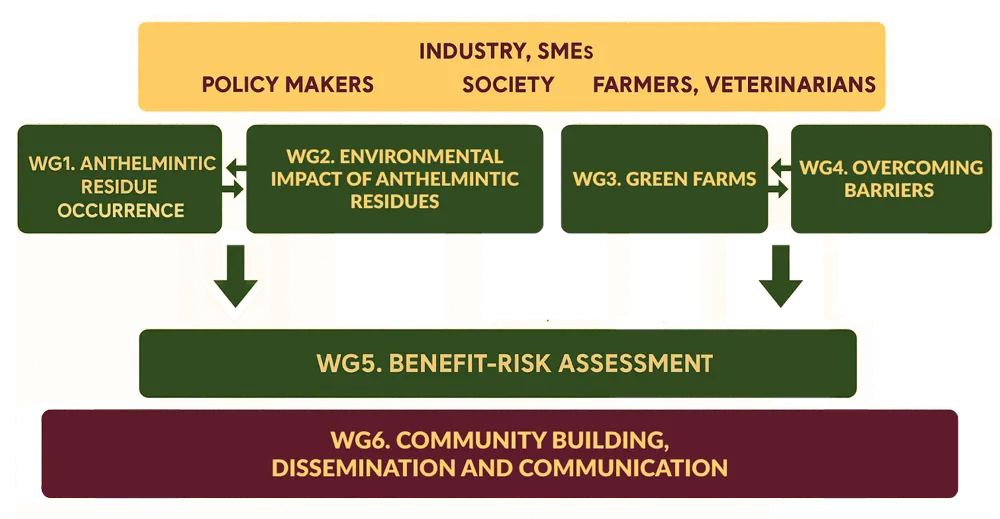
We organize ourselves into different specialized Working Groups
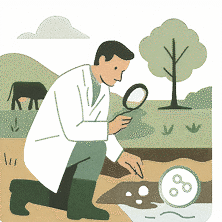
WG1 Anthelmintic residue occurrence in environment and associated factors: integrating farm practices and environmental dimensions
WG1

Anthelmintic residue occurrence in environment and associated factors: integrating farm practices and environmental dimensions

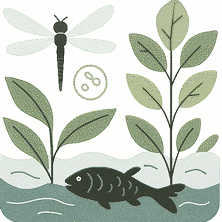
WG2 Environmental impact of anthelmintic residues: assessing repercussion and risk in ecosystem

WG2

Environmental impact of anthelmintic residues: assessing repercussion and risk in ecosystems

WG3 Green farms: redesigning helminth control with more sustainable solutions

WG3

Green farms: redesigning helminth control with more sustainable solutions

WG4 Overcoming barriers: to implement sustainable worm control practices

WG4

Overcoming barriers: to implement sustainable worm control practices

WG5 Benefit-risk assessment of anthelmintic use

WG5

Benefit-risk assessment of anthelmintic use

WG6 Community building, dissemination and communication

WG6

Community building, dissemination and communication

Transforming research into real impact

Pan-European environment
Interdisciplinary research network
Interconnected, interdisciplinary, collaborative, and data-intensive
Networking activities
Advance knowledge and strengthen the research and development sector
For individuals of all levels of seniority to boost their careers.

Do you want to join the Network?

Logo ENVIRANT

Environmental impact of anthelmintics in livestock and alternatives to minimize their use

COST (European Cooperation in Science and Technology) is a funding agency for research and innovation networks. Our Actions help connect research initiatives across Europe and enable scientists to grow their ideas by sharing them with their peers. This boosts their research, career and innovation.